Read on to find out what the AusSRC team has been up to in the third quarter of 2025.
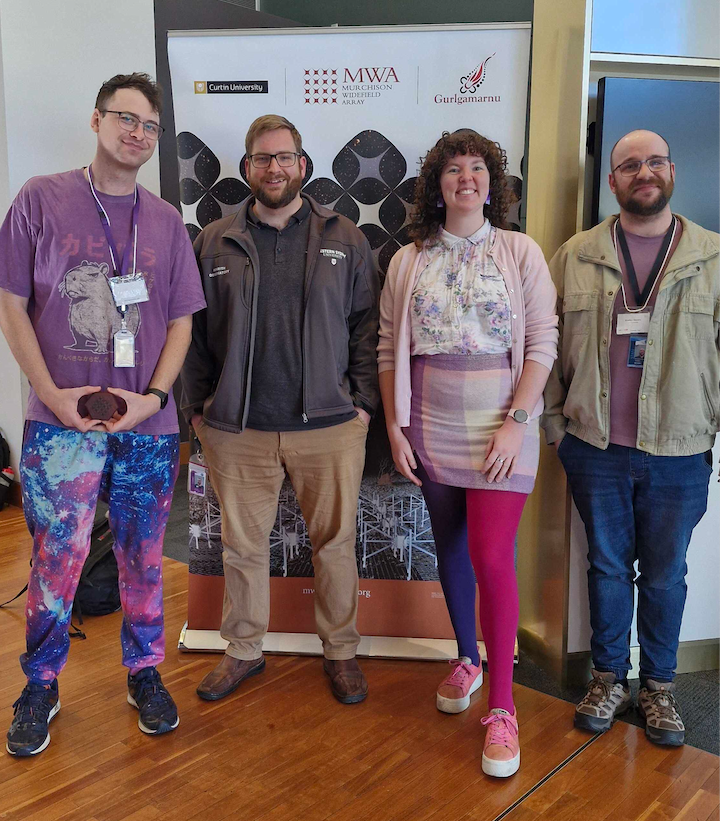
AusSRC personnel at the 2025 MWA Project Meeting. From left to right: Dev Null, Dr. Jordan Collier, Dr. Kat Ross, Dr. Bradley Meyer.
AusSRC - IDIA MoU enables astronomy at scale
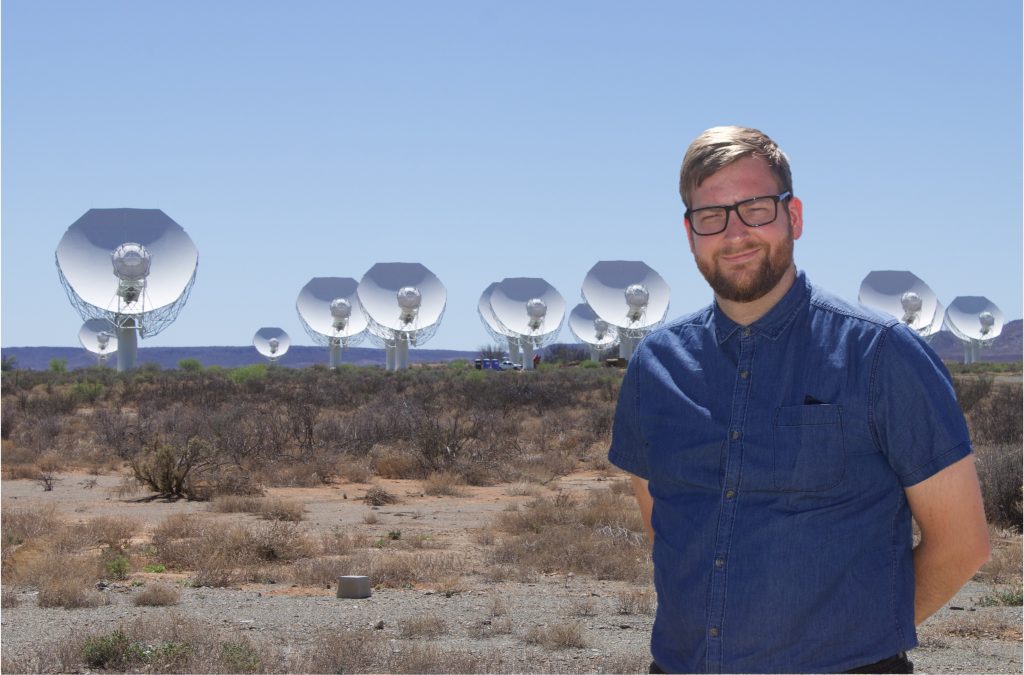
AusSRC Senior Scientist Dr. Jordan Collier in front of the MeerKAT telescope at the South African Radio Astronomy Observatory.
A new collaboration between the Australian SKA Regional Centre (AusSRC) and South Africa’s Inter-university Institute for Data Intensive Astronomy (IDIA) is enabling critical international data transfers to support the study of a new class of cosmic signals known as long-period radio transients (LPTs).
These powerful, repeating radio pulses require high-resolution observations using the MeerKAT telescope in South Africa.
The AusSRC plays a key role in enabling quick and reliable data transfers to Australia for analysis.
Using AARNet’s high-speed research network and the Globus data transfer platform, researchers are able to move from observation to analysis without delay, making it possible to respond rapidly to new discoveries and optimise future observations.
As astronomy becomes increasingly data-driven, AusSRC’s infrastructure and expertise are vital in advancing international research and preparing for the challenges of the SKA.
You can read more about how AusSRC is empowering new discoveries on AARNet’s website.
AusSRC Senior Developer Dev Null wins Best Talk Overall prize at the 2025 MWA Project Meeting
In late August, members of the AusSRC team participated in the annual Murchison Widefield Array (MWA) Project Meeting – a gathering of researchers, engineers, and other MWA stakeholders to share updates, present results, plan future work, and coordinate activities.
AusSRC Senior Developer Dev Null was invited to speak at the event, and was awarded the conference’s Best Talk Overall prize for their efforts.
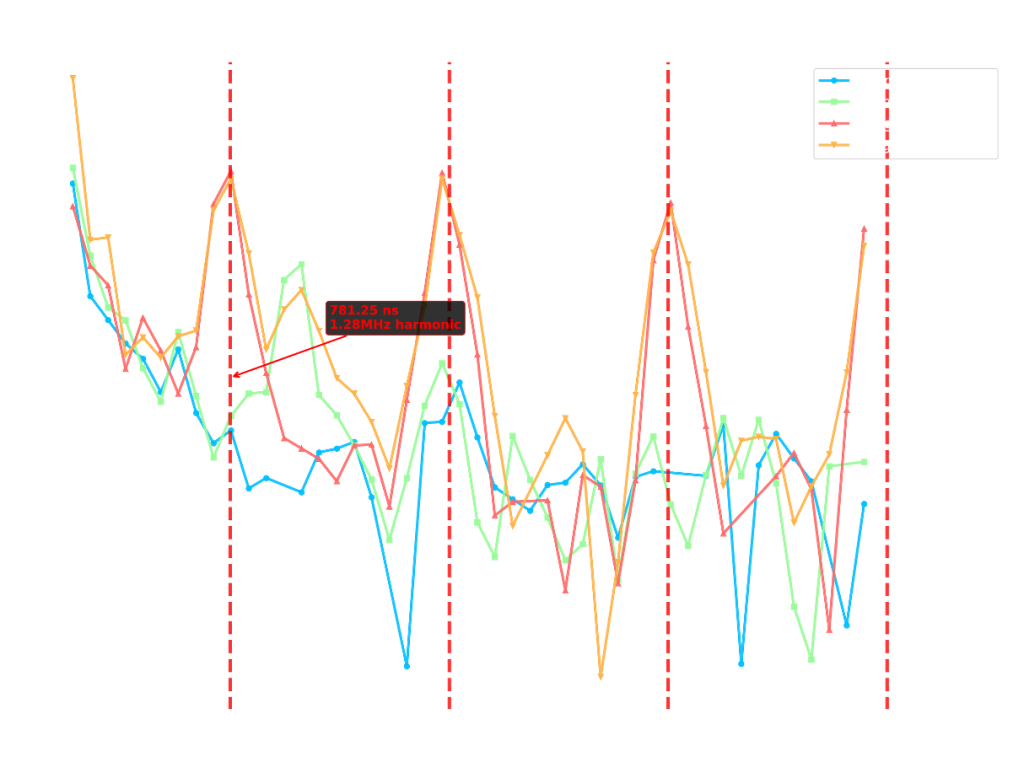
Dev’s talk, entitled ‘A farewell to the Coarse Channel Harmonic’, centred on how a hardware upgrade fixed an issue researchers have had in searching for Epoch of Reionization signals – a period in the early universe when the first stars and galaxies formed.
This plot, delivered as part of Dev Null’s talk, shows a clear improvement in the newly launched Phase III MWA, which will open up new possibilities for highly sensitive science cases like Epoch of Reionization.
AusSRC Director Dr. Karen Lee-Waddell captivates future STEM experts during National Science Week 2025
This National Science Week saw AusSRC Director Dr. Karen Lee-Waddell deliver hands-on physics and astronomy lessons to over 190 students at North Morley Primary School.
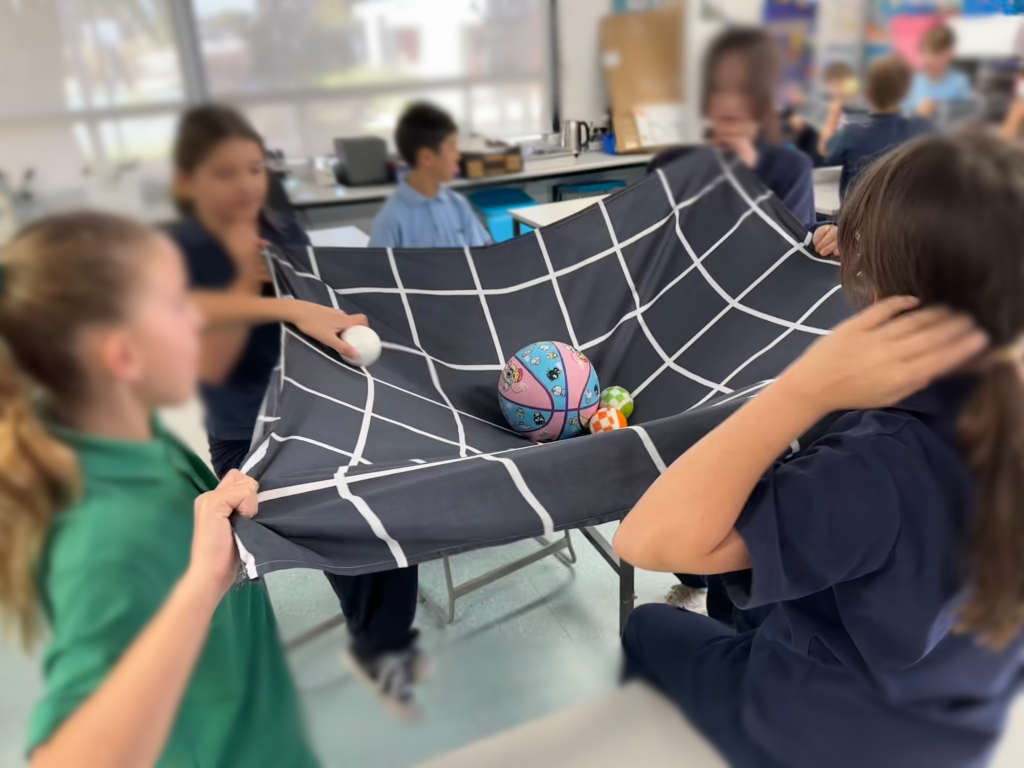
Throughout the day, Karen engaged students from kindy to year six with various activities on gravity, dark matter, and galactic dances – topics that resonate strongly with the theme of this year’s National Science Week: ‘Decoding the Universe’.
The day left the students with a new appreciation of astronomy fundamentals and resulted in one very tired scientist!
North Morley Primary students ‘bend the fabric of space and time’ during Dr. Karen Lee-Waddell’s lesson.
AusSRC Business Support Team tours the Pawsey Supercomputing Research Centre
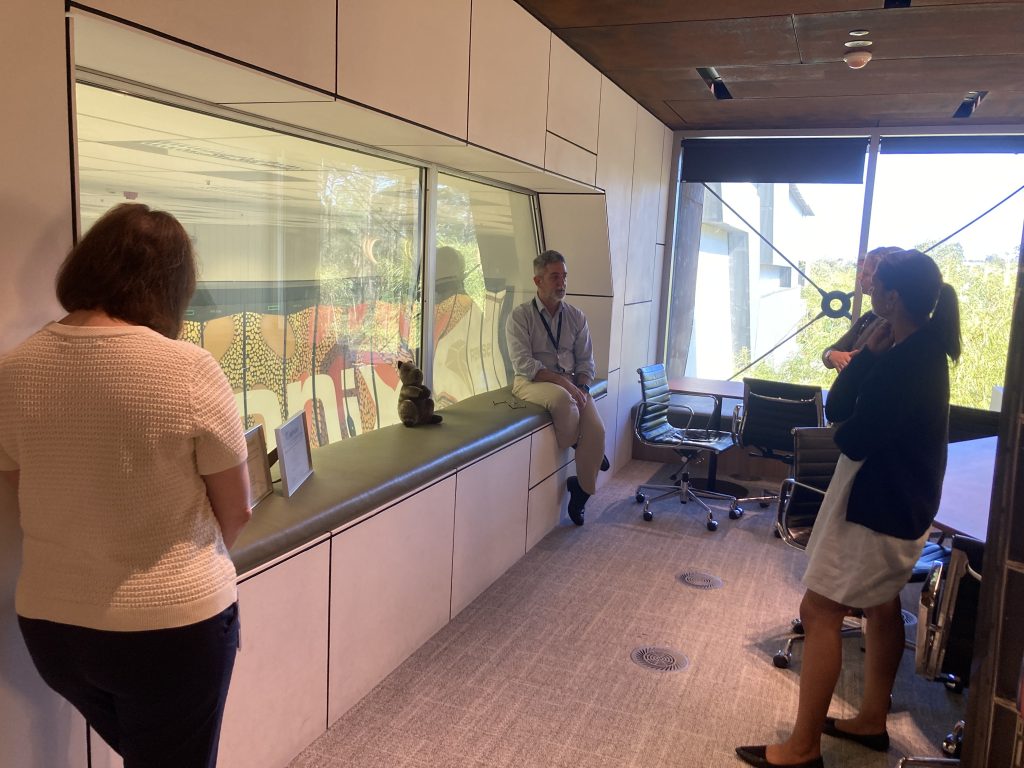
Earlier this month, the AusSRC Business Support team were invited to tour the Pawsey Supercomputing Research Centre.
Led by Mark Gray, Pawsey’s Head of Strategic Partnerships (and AusSRC Board Member), the team learned about the important role Pawsey plays in providing high performance computing and storage to Australia’s research sector. They were also able to see the supercomputers in action, including the world’s first world’s first room-temperature diamond-based quantum computer that runs in a regular computer room.
The AusSRC Business Support team listens to Pawsey’s Head of Strategic Partnerships, Mark Gray, speak about the Centre.
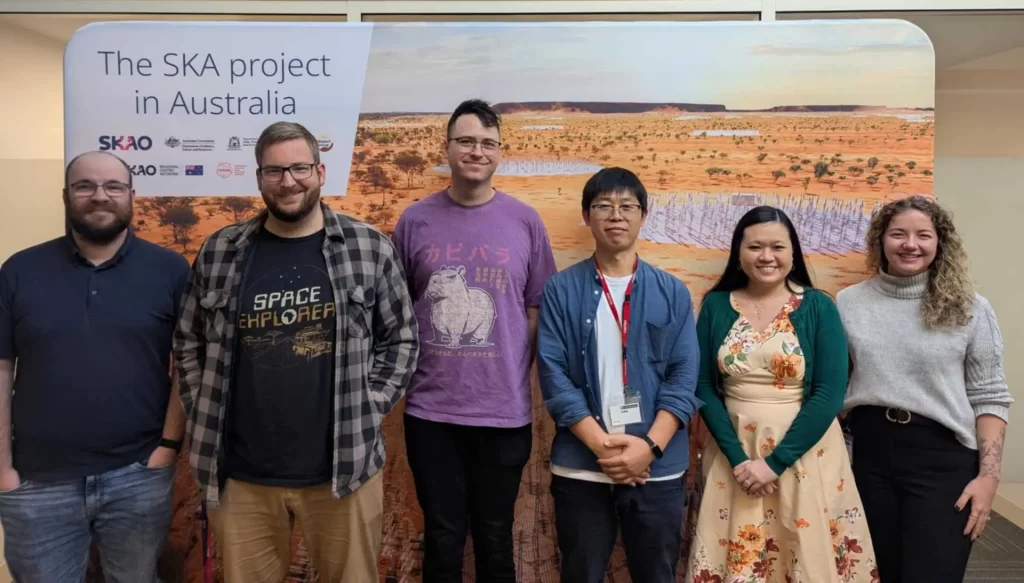
AusSRC hosts visiting fellow Dr. Shaoguang Guo from ChinaSRC
The AusSRC recently welcomed Dr. Shaoguang Guo from the Shanghai Astronomical Observatory, Chinese Academy of Sciences, as part of a fellowship associated with the Australian-China Consortium for Astrophysical Research (ACAMAR) to support a collaborative exchange program between Australian and Chinese astronomers.
Hosted by AusSRC Director Dr. Karen Lee-Waddell and AusSRC Project Scientist Dr. Jordan Collier, Dr. Guo’s visit focused on advancing scientific workflows, infrastructure and and pipelines critical to the development of the SRCNet. His work centred on SKA-related research, including demonstrating SRCNet v0.1, and exploring collaborative tools within the Cube Analysis and Rendering Tool for Astronomy (CARTA).
Dr. Shoaguang Guo (third right) pictured with some of the AusSRC team.